
People often assume I joined the U.S. Army out of a lifelong desire to serve my country. The truth is more practical. As a high school senior in Massachusetts, my family and I simply couldn’t afford college. I applied for a four-year Army ROTC scholarship and was fortunate enough to receive one. A small college in Florida offered to pay my room and board if I attended on the Army scholarship, so I packed my bags and moved nearly 1,500 miles from home. I had no idea what I was getting into, but it was the beginning of a journey that would ultimately shape every aspect of my professional life. I graduated as a Distinguished Military Graduate and was commissioned as an Infantry Second Lieutenant.
THE VALUE OF GREAT MENTORS
Looking back, I can honestly say that the Army changed me—not because of the uniform, but because of the people. Like many young officers, I had plenty of energy and confidence but much to learn. Fortunately, I served under and was guided by outstanding leaders.
Captain Casciaro taught me to take initiative. Rather than waiting for opportunities, he expected leaders to create them. He encouraged calculated risk-taking and challenged me to solve problems before they became someone else’s responsibility. That mindset has remained with me throughout my career.
Captain McLaughlin entrusted me with responsibilities that stretched my abilities. As Executive Officer of Headquarters Company, he expected results—not excuses. He gave me tremendous freedom while holding me accountable for every outcome. It was during this assignment that I developed the organizational and planning skills I still rely upon every day.
Lieutenant Colonel Decker challenged me intellectually. He demanded that I think beyond conventional solutions and support every recommendation with facts and analysis. He also instilled the discipline of taking meticulous notes and mastering details so they were readily available when decisions needed to be made.
These three men didn’t simply supervise me. They developed me.
RANGER SCHOOL: LEARNING ABOUT MYSELF AND THE IMPORTANCE OF OTHERS
No experience has taught me more about myself than Ranger School, which I attended after Infantry Officer Basic Course and Airborne School at Fort Benning. Ranger School pushes every participant beyond what they believe are their physical and mental limits. It also teaches an important lesson that has stayed with me throughout my life: success is rarely an individual accomplishment. Determination matters. Preparation matters. But support from others matters just as much.
I’ve always appreciated the quote, “The harder I work, the luckier I get.” Ranger School reinforced that idea. Hard work creates opportunities and fosters teamwork. Success often depends upon the talents, support, and sacrifices of others.
The lesson on appreciating others and recognizing my reliance on them carried into my leadership roles.
LEADERSHIP ACROSS DIFFERENT ENVIRONMENTS
Following Ranger School, I spent three years in Mannheim, Germany, including a deployment to Kuwait following Operation Desert Storm. Later, I transitioned from Infantry into Military Intelligence, attended the Military Intelligence Advanced Course at Fort Huachuca, Arizona, and served as Operations Officer for an unmanned aerial vehicle (UAV) project. The transition required a completely different leadership style.
The Infantry was highly structured and disciplined. My UAV assignment required supervising soldiers and Marines from different backgrounds, specialties, and ranks. I quickly learned that leadership isn’t about treating everyone the same—it’s about understanding different personalities and adapting your approach so each person can perform at their best. That lesson has proven invaluable throughout my business career.
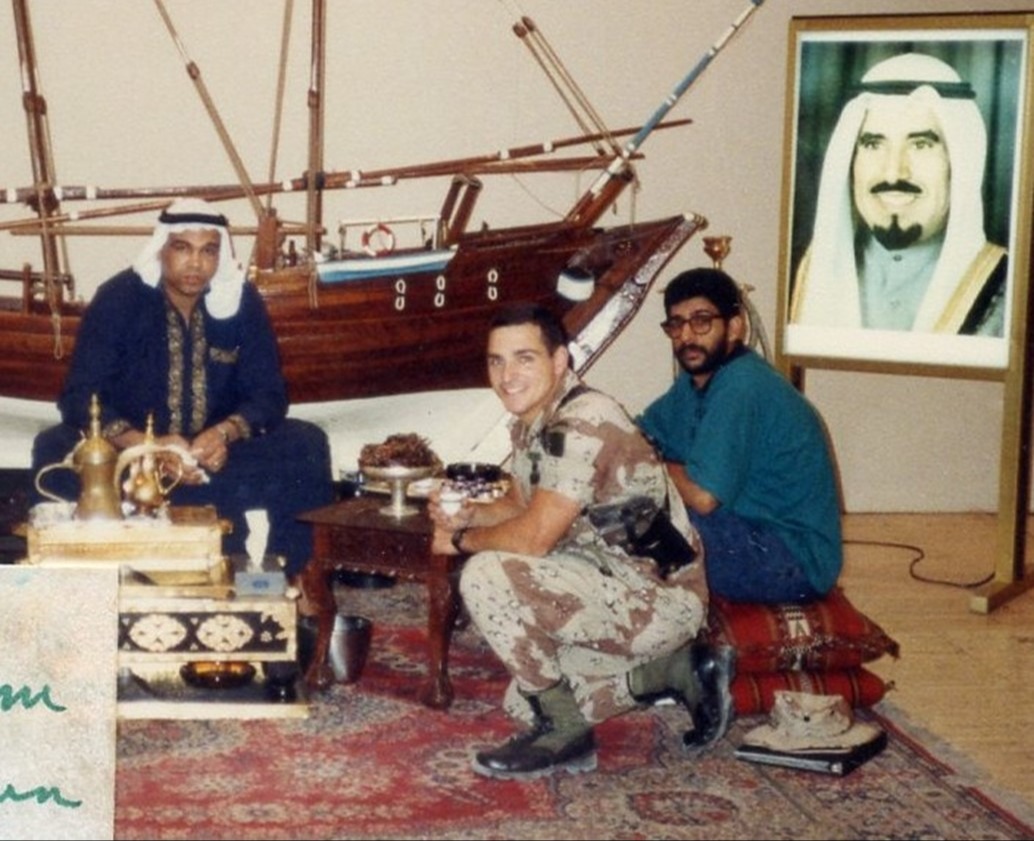
Kuwait 1991
LEARNING TO MAKE INFORMED DECISIONS
My final duty station was with the 82nd Airborne Division at Fort Bragg, North Carolina.
As the Intelligence Officer for an Engineer Battalion, my job was to collect information, analyze it, identify patterns, and project what was likely to happen on the battlefield. That responsibility may sound very different from wealth management, but the underlying skills are remarkably similar.
Today, I study economic data, market trends, tax law, and geopolitical events to help clients prepare for what may lie ahead. Just as in military intelligence, the objective isn’t predicting the future with certainty. It is evaluating probabilities, understanding risk, and making informed decisions based upon facts rather than emotion. That disciplined analytical process remains one of the foundations of my investment philosophy.
THE IMPORTANCE OF TEAMWORK
Lieutenant Colonel Decker later gave me one of the greatest opportunities of my Army career—commanding an Engineer Company despite not being an engineer officer. Any success I had belonged as much to my First Sergeants, Non-Commissioned Officers, Executive Officer Lieutenant Hicks, and every soldier in the company. They reinforced one of the greatest leadership lessons I’ve ever learned: No one succeeds alone.
That lesson directly influences how our advisory team operates today. Our clients don’t hire one person. They benefit from a coordinated team focused on investment management, financial planning, estate planning, retirement planning, tax awareness, and exceptional client service. The collaboration that allows us to serve clients at a high level is rooted in lessons I first learned while wearing Army green.
WHY I LEFT
Leaving the Army was one of the hardest decisions I’ve ever made. I loved serving. I loved leading soldiers. I loved jumping out of airplanes. Most of all, I loved the camaraderie. There is simply nothing in civilian life that compares to standing shoulder-to-shoulder with people who train together, deploy together, and depend upon one another in difficult circumstances. Those relationships are unlike any I’ve experienced before or since.
However, I also wanted an opportunity where my effort and initiative would directly determine my future. I wanted the freedom to build something of my own. That opportunity came when I was offered a position as a financial advisor with PaineWebber. Once again, I had no idea what I was getting myself into, but it proved to be one of the best decisions of my life.
SERVING CLIENTS TODAY
Many people ask whether my military experience helps me as a financial advisor. The answer is yes—every single day.
The discipline that carried me through Ranger School became the discipline required to build a business through years of cold calling. The analytical skills I developed in Military Intelligence help me evaluate investments, identify risks, and make informed recommendations. The leadership lessons I learned as a company commander remind me that every client deserves honesty, accountability, and someone who will put their interests first.
Most importantly, the Army taught me that taking care of people goes far beyond completing a task. As an officer, that meant caring for soldiers and their families. Today, it means caring for clients and their families.
Investment management is only one part of that responsibility. Financial planning, estate planning, tax planning, retirement income strategies, insurance planning, and helping families navigate difficult life transitions are all essential parts of serving clients well. Our goal has never been simply to manage investments. Our goal is to become trusted advisors for every important financial decision our clients face.
LOOKING BACK
When I first entered the Army, I did so because I needed help paying for college. I left eight years later with something far more valuable. I gained confidence, discipline, resilience, lifelong friendships, extraordinary mentors, and leadership lessons that continue to shape every decision I make. The Army prepared me to lead soldiers. More importantly, it prepared me to spend the rest of my career serving people. For that, I will always be grateful.
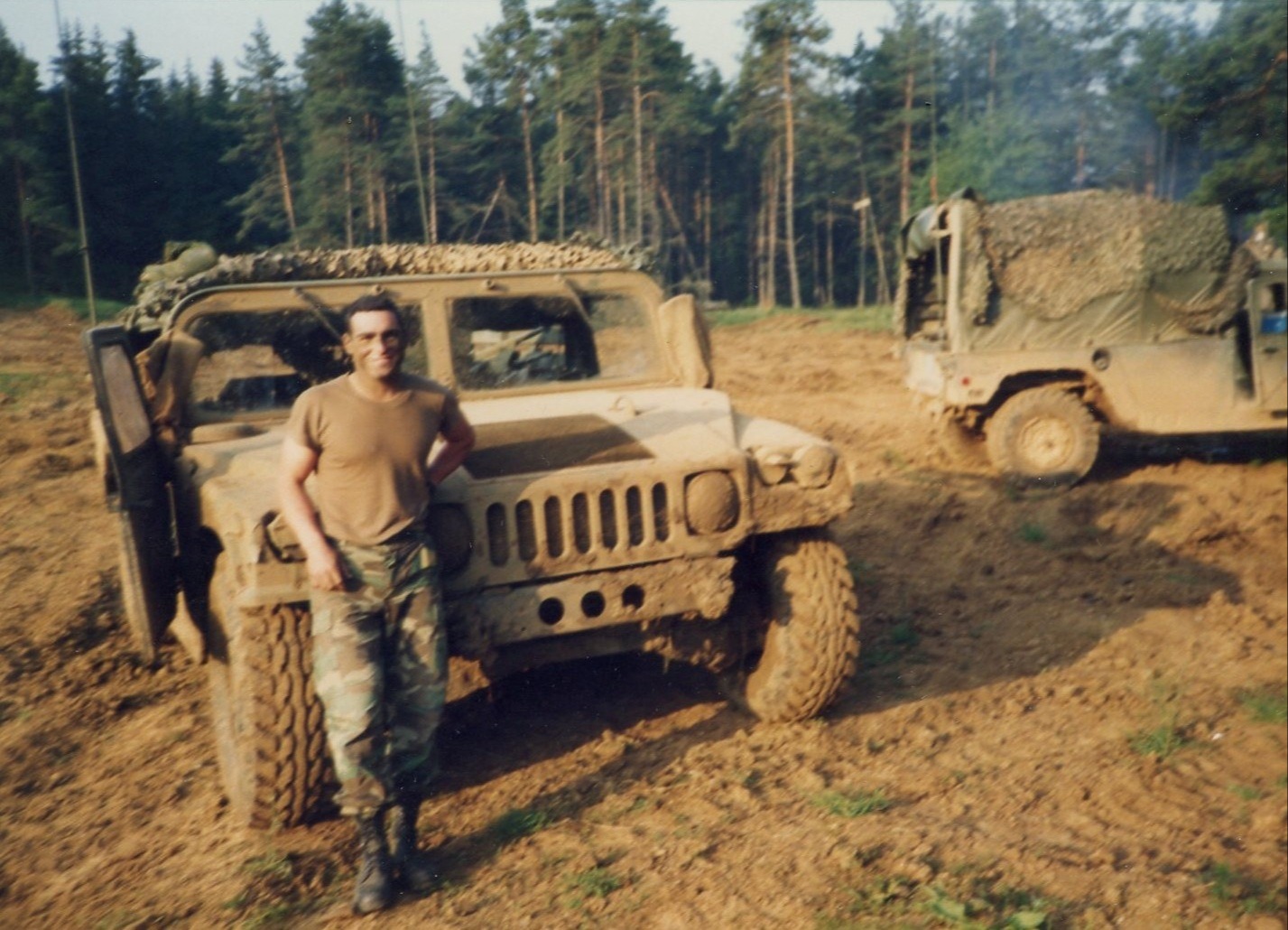
Germany 1992
"The appearance of U.S. Department of War (DoW) visual information does not imply or constitute DoW endorsement."


