

News coverage regarding El Niño, the recurring weather event characterized by rising sea temperatures in the Pacific Ocean, is beginning to garner some attention. The US NOAA (National Oceanic and Atmospheric Administration) currently sees a greater than 90% chance of a very strong El Niño during fall/winter 2026 to 2027, making this an economic story worth watching and not just a weather story. Significant shifts in weather may affect food, energy, infrastructure, inflation and economic growth.
Sam Silverberg CFA, a financial advisor of Loyalhanna Wealth Advisors, has some experience working on Climate Risk and the impact on financial systems. At PNC Bank, Sam led a team of data professionals with the goal of quantifying the impact of rising ocean temperatures, and extreme weather, on the bank's financial assets. Using python coding, geospatial data, and advanced climate models, they were able to evaluate the mortgage exposure to increasingly frequent hurricanes, wildfires, and high wind speeds.
Here are some of his thoughts regarding the upcoming weather pattern. For more information on the topic of climate risk, he suggests clients visit the NOAA website directly regarding Sea Level Rise or the IPCC's latest report on global climate, the Sixth Assessment Report (AR6).
How Weather Can Reach the Markets
The connection is fairly simple: Weather changes → Supply disruptions → Higher or lower prices → Economic impact (GDP is a measure of OUR income)
Drought can hurt crop production. Flooding can damage infrastructure. A warmer winter can reduce heating demand. Each can affect different areas of the economy in different ways.
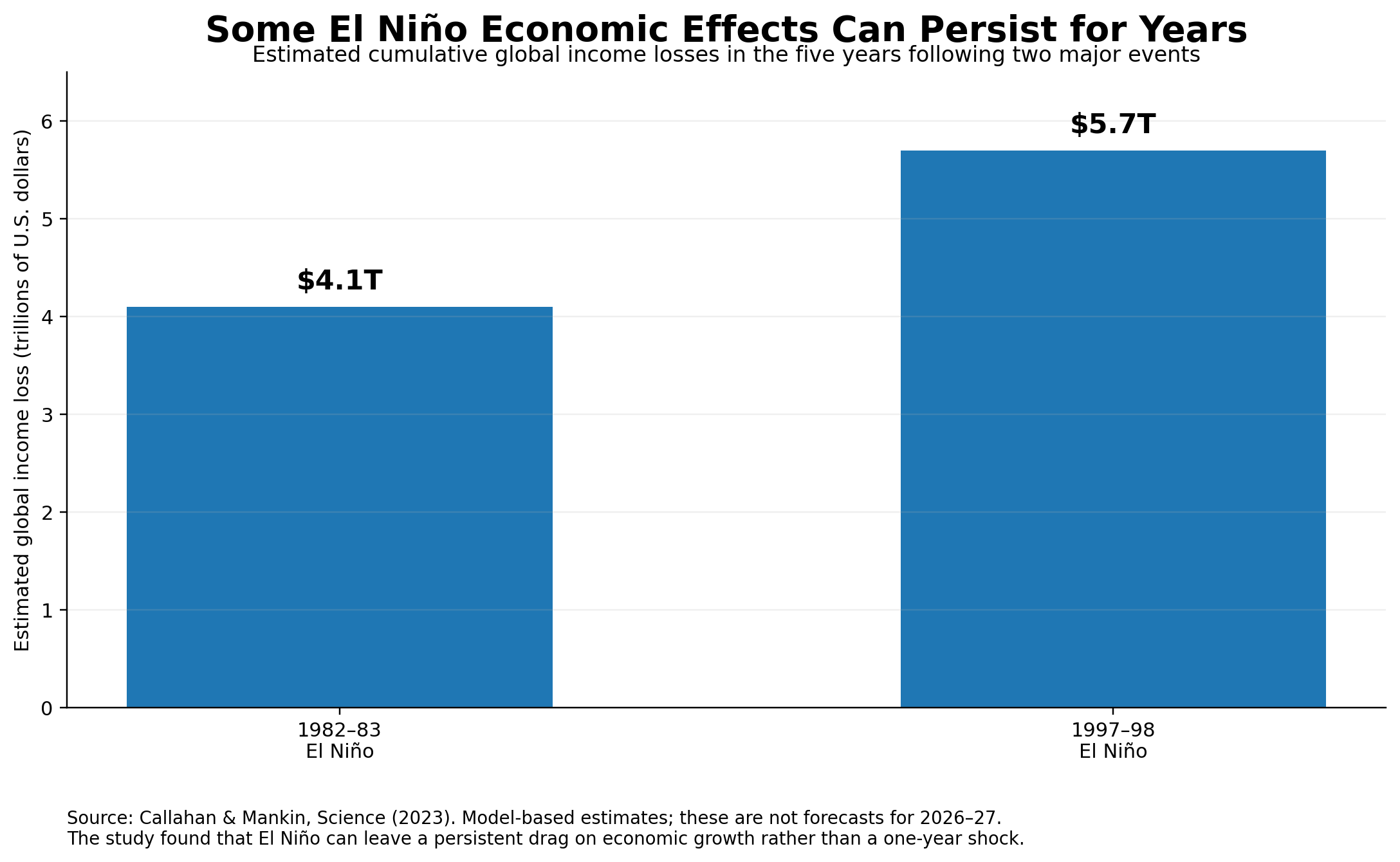
Key Point: There is a meaningful difference between Supply Inflation & Demand Inflation
The Federal Reserve can raise interest rates to slow consumer demand, but higher interest rates cannot make it rain, grow more crops, produce more energy or rebuild damaged infrastructure overnight. That is why weather-related supply disruptions can create a different type of inflation challenge.
What Could It Mean for Investments?
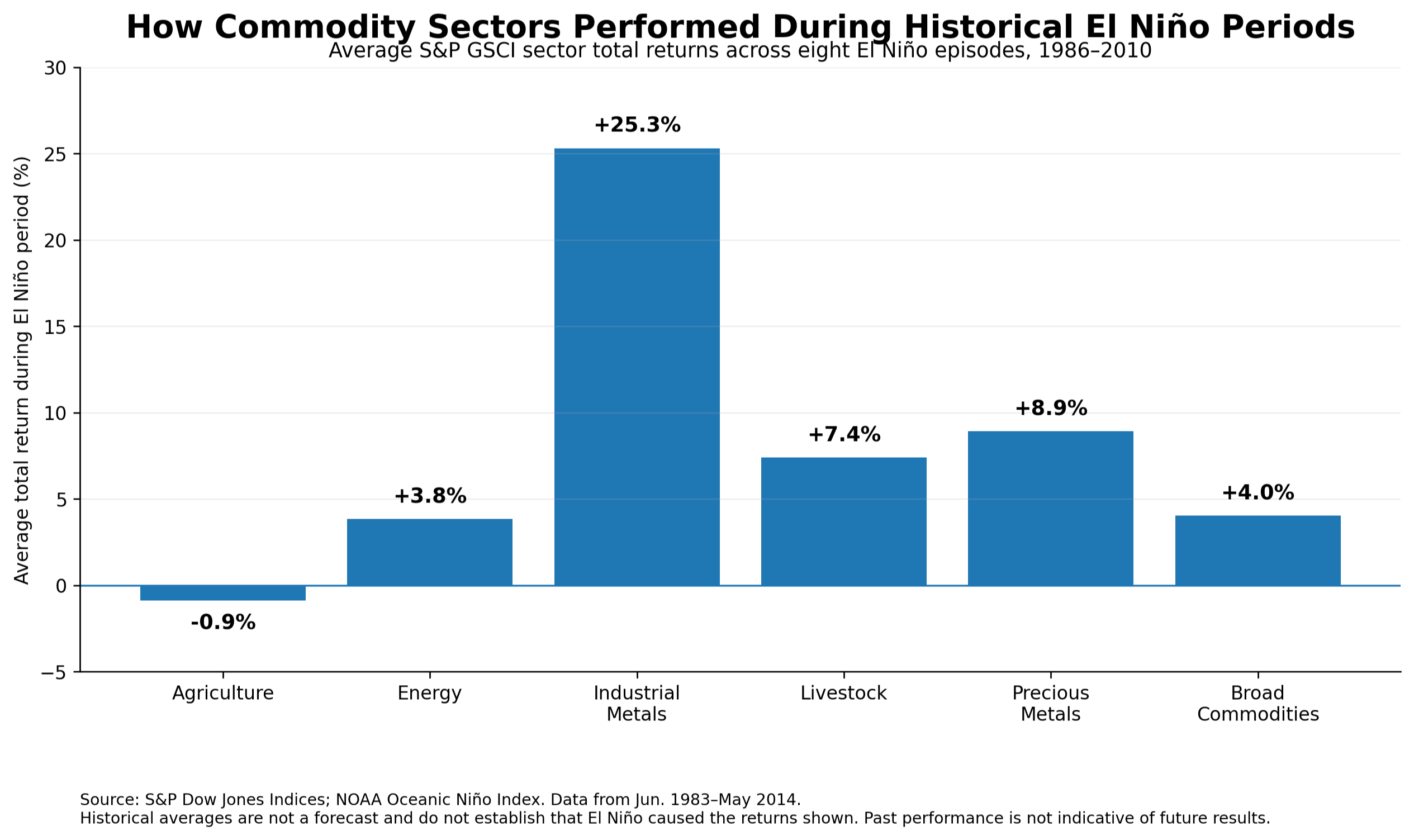
There is no single “El Niño trade.”
- Agriculture: Crop stress could push some food prices higher.
- Energy: A warmer winter could reduce demand for natural gas.
- Infrastructure: Flooding and storm damage can increase repair and construction needs.
- Real assets: Commodities, natural resources, infrastructure and gold may respond differently than traditional stocks and bonds.
Our Takeaway:
We are not trying to predict whether corn, cocoa, oil or natural gas will be higher six months from now. We are asking a broader question:
If the next inflation shock comes from things central banks cannot manufacture, such as: food, energy, infrastructure and natural resources, is the portfolio prepared?
As investment professionals, the tenant of diversification remains important. Real Assets may provide some diversification benefits for investors that rely on the old school 60/40 retirement portfolio structure.
If you have questions regarding this article, please reach out via email to LWA@janney.com
The concepts illustrated here have legal, accounting and tax implications. Neither Janney Montgomery Scott LLC nor its Financial Advisors give tax, legal, or accounting advice. Please consult with the appropriate professional for advice concerning your particular circumstances. For more information about Janney, please see Janney's Relationship Summary (Form CRS) on www.janney.com/crs which details all material facts about the scope and terms of our relationship with you and any potential conflicts of interest. Thank you


