

The Treasury recently announced that it will increase the amount of certain long-term Treasury bonds it is willing to buy back. That may sound strange because if the federal government already has a large amount of debt, why would it buy some of that debt back?
The simple answer: the Treasury is trying to make the bond market work more smoothly. It is unlikely that the Secretary of the Treasury, Scott Bessent, will be able to influence our federal Deficit at this time. In practice, the Treasury holds scheduled buyback operations where investors and financial institutions can offer certain older Treasury bonds for sale. The Treasury selects which bonds to purchase at competitive market prices, pays the sellers, and then retires those bonds once the transaction is complete.
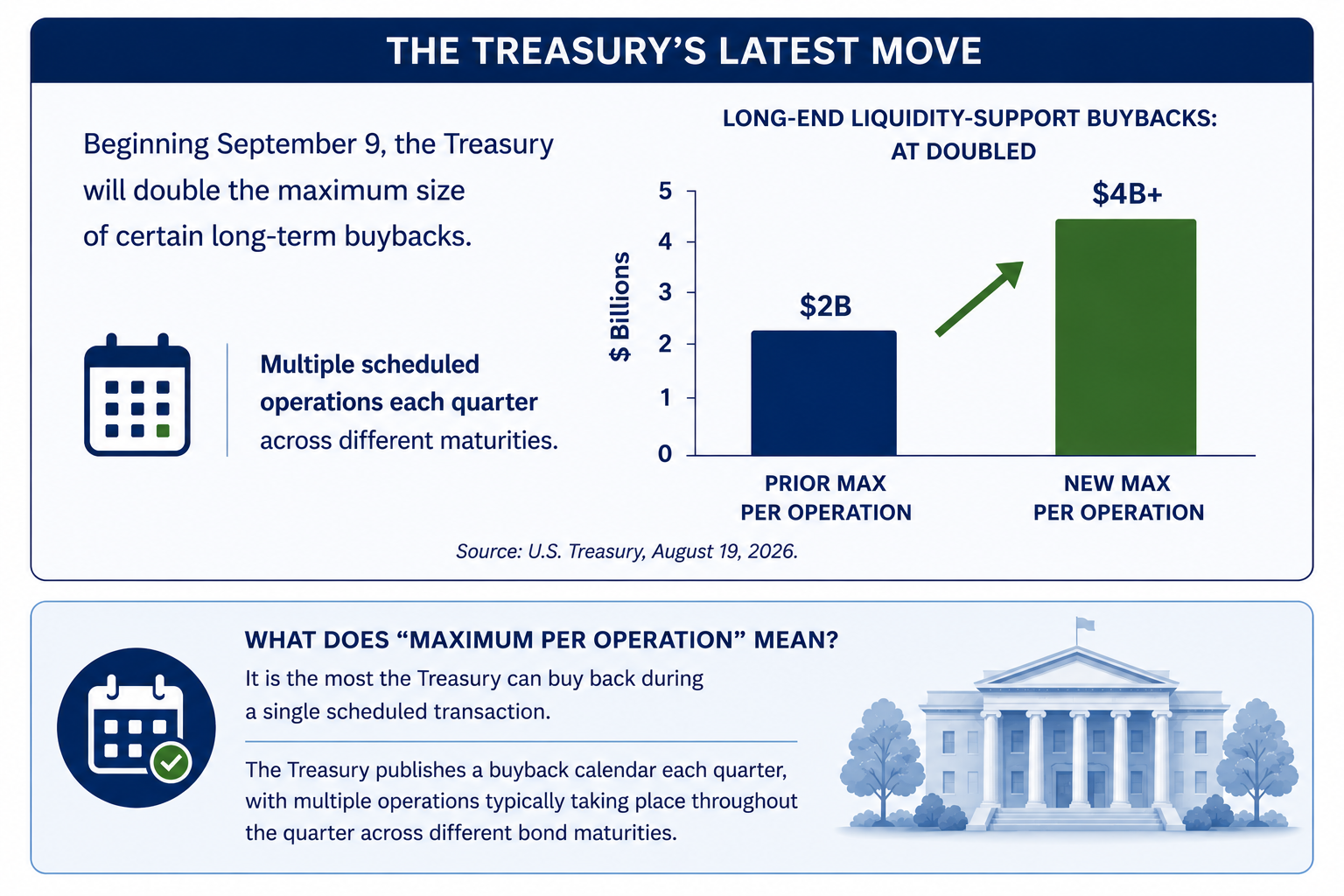
In the short-term, the long-term treasury markets welcomed the news of expanded Treasury support, with the hope of less volatile yields going forward.
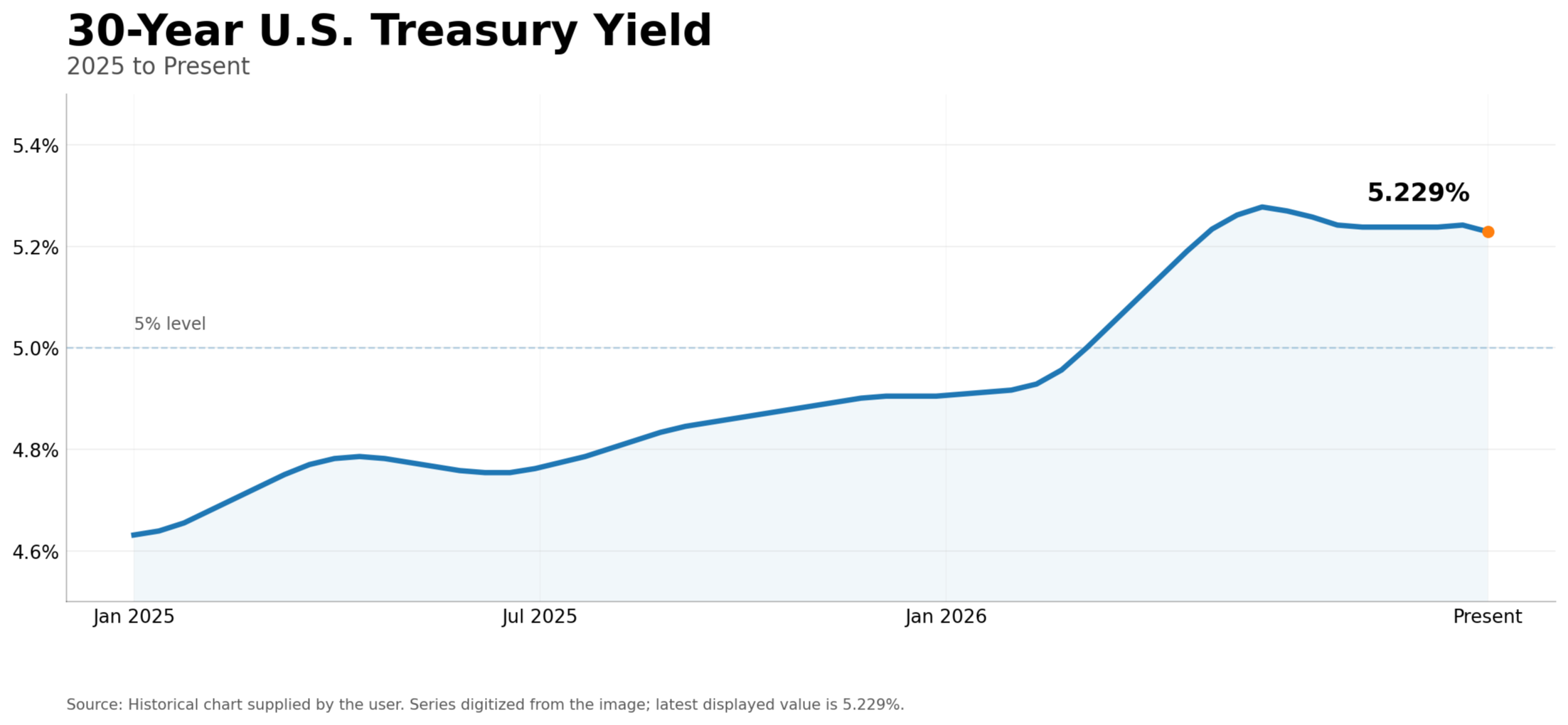
- Overall Economy: Treasury yields influence borrowing costs throughout the economy. A healthier Treasury market can help keep markets functioning efficiently and may reduce some of the interest rate pressure on mortgages, business loans, and other forms of borrowing.
- Equities: Less volatility in long-term interest rates can be supportive for stock valuations. More stability in borrowing costs can reduce some of the uncertainty facing businesses and investors.
- Bank Health: Giving banks and other financial institutions another place to sell older Treasury bonds can help them more easily manage their balance sheets and free up capacity to make other investments or loans.
Bottom Line
The Treasury is trying to make the world’s largest bond market more liquid, but buybacks cannot solve inflation, federal deficits, or heavy government borrowing on their own.
If you have questions regarding this article, please reach out via email to LWA@janney.com
The concepts illustrated here have legal, accounting and tax implications. Neither Janney Montgomery Scott LLC nor its Financial Advisors give tax, legal, or accounting advice. Please consult with the appropriate professional for advice concerning your particular circumstances. For more information about Janney, please see Janney's Relationship Summary (Form CRS) on www.janney.com/crs which details all material facts about the scope and terms of our relationship with you and any potential conflicts of interest. Thank you


